
Power, race, justice and restorative justice
My work on race equality
My journey in the race equality field formally started when I became the Human Rights Advisor of the UK Ministry of Justice in 2005. During that time I worked on advising the government on how to better implement human rights in public services such as hospitals and A&E, prisons and schools.
Soon later, I felt draw to the NGO sector and joined Race on the Agenda (ROTA) as its Head of policy only soon to be appointed as its first White Chief Executive. During that time I led on several legislative and policy national initiatives aiming to promote race equality in the UK. Some examples include:
- I set up the ‘Winning the Race’ coalition bringing together key BME organisations to influence the Single Equality Act in matters of race
- Collected from Black Communities evidence and gave them to Parliament in relation to the then Equality Bill focusing on BME rights
- 10 years on from The Macphereson inquiry, I launched the Transformative Justice Project focusing on addressing race hate crime in London
- I campaigned on the Disproportionate Impact of the Recession on Black and Minority Ethnic Communities
I am also passionate about expanding and challenging the extant literature on race. Therefore, while I was at ROTA I received funding to carry out Gavrielides, T. et al (2007) The Visible and Hidden Dimensions of London’s Homelessness: A Black, Asian and minority ethnic account, ROTA: London. DOI: 10.13140/RG.2.1.1970.1207. I also published several peer-reviewed papers on race such as:
- Gavrielides, T. (2025). “Race hate and restorative justice: An evaluation of a small-scale youth intervention in the UK”. Internet Journal of Restorative Justice, Vol: 13(2).
- Gavrielides T. (2014). “Bringing Race Relations into the Restorative Justice Debate”. Journal of Black Studies, Vol. 45: No. 3, pp. 216-246
- Gavrielides, T. and Blake, S. (2013). Race in Probation: Improving outcomes for black and minority ethnic users of probation services, London: IARS Publications. ISBN: 978-190764119-0.
- Gavrielides, T. (2007). The Commission for Equality and Human Rights and London Voluntary and Community Sector: London: Race on the Agenda. DOI: 10.13140/RG.2.1.2613.3525.
- Gavrielides, T. (2008). Addressing Race Hate through Restorative Justice: A youth-led case study: London – Bradford – Liverpool. London: IARS Publications. ISBN: 978-1-907641-37-4.
- Gavrielides, T. (2007) The contribution of equality groups to London’s economy: A BAME – LGBT case study, London: Race on the Agenda.
- Gavrielides, T. (2007). The Commission for Equality and Human Rights and London Voluntary and Community Sector: London: Race on the Agenda. DOI: 10.13140/RG.2.1.2613.3525.
As a member of an ethnic community and a son of a refugee family, my race equality work is more than a job. It is a way of living and personal mission to address one of the most persistent types of sufferings in our modern societies.
My work on power and justice
Admittedly, the literature on power, its definitions and different forms, how to develop or diminish it (whether at the inter-personal, inter-community or inter-state level) is rich. And yet, never before have we so silently succumbed to forces of power defining our lives purpose, current reality and future.
This is a very scary feeling indeed. But this fear is constructive and honest. It can lead to change, and improvement.
It is a different kind of fear, which I want to expose through my work as being inconspicuous and dangerous. As I write this, the world is experiencing unprecedented health and socio-economic impacts, which can only be compared to those that followed World War II. We are afraid that we will lose our life, health and independence, income and homes, family and friends. The scale of this unprecedented fear is increased with continuous threats that are brought to our homes, dinner parties, private moments and bed time. These may relate to terrorist attacks, financial and refugee ‘crises’, unemployment, migration and viruses. These fears create dependencies. Dependencies allow control. And control serves status quo. The flip side of this is described by Malcom X: “I for one believe that if you give people a thorough understanding of what confronts them and the basic causes that produce it, they’ll create their own program, and when the people create a program, you get action.”
I have never believed in conspiracy theories; in fact, my research and legal background made me a rather dull chat friend, as I always ask for evidence. And it is this evidence that I want to present through my work, which aims to paint the aforementioned hidden picture and by starting the dialogue that we won’t have.
We cannot deny what is; we can only learn to observe it, and as we start to awaken, we then seek for tools that will help us regain the power that we have silently lost through gradual and consensual new forms of slavery. This responsibility is intensified, if we have undertaken a role to serve justice as practitioners, researchers, policy makers or campaigners.
The core of my work is how to understand power in both its positive and negative forms. While its abuse can lead to human suffering, conflict and poverty, its good use can free us from fear, dependencies and control.
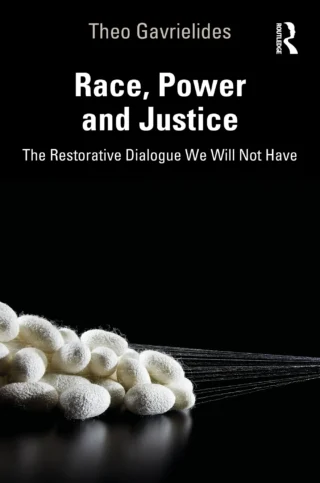
I have always felt that there was something lingering in the background of all my projects, work and writings. A bigger picture that I could not see. The issue that I would not address. The dialogue that I would not have.
This feeling became gradually stronger, as I learned to observe myself, my actions (or inactions), fears and insecurities. My background in legal studies as well as my day job did not help with this process. In fact, they distracted me from investigating further this lingering feeling. Philosophy and privileged moments of true dialogue with friends and colleagues helped me to start painting the hidden picture…
I have now come to believe that this subconscious behaviour is by no coincidence. It is part of the hidden picture, which I could not see for years. It is the result of many decades of conscious planning to achieve what Foucault and many others have called “power and control”. By controlling our sense of justice, expectations are directed and the reality can be manipulated. Without this manipulation, there can be change, and change is a thread to the status quo that leads to power abuse and inequality.
Book impetus
But this fear is constructive and honest. It can lead to improvements and change. It is the other kind of fear that I want to expose as dangerous and inconspicuous.
This book and my wider work on power respond to this responsibility. They are structured around four concepts, which act as pillars for their arguments and indeed contribution: power, race, justice and restorative justice. This book celebrates 20 years of working in the restorative justice field. During this time, the learning that I was able to receive and give has been incredible, and I hope that each chapter demonstrates and reflects this.
Core concepts
The book is structured around four concepts, which act as pillars for its arguments and indeed contribution: power, race, justice and restorative justice. These concepts are brought under one roof and challenged for two reasons.
First, I want to create a normative and practical framework that can be used to counter-balance power abuse and the way in which it is manifested in inter-personal, inter-community or inter-state affairs, relationships, conflicts and partnerships. As I observe the growing inequalities that are being manifested in our modern societies, I challenge the way power and race have been interpreted. I open the debate that we won’t have to construct new conceptual methodologies, which I believe respond to our modern realities. I do so with outmost respect to the race equality movement, while acknowledging the rich literature on power, and bearing in mind that some of my arguments will make uncomfortable reading.
Second, I want to elevate justice, and restorative justice in particular, as I claim responsibility for not challenging them enough during times that communities needed them. Like most servants of justice and other members of the restorative justice movement, I became victim of the subconscious methodologies that the powerful employ to maintain the status quo. As I am awakening, I challenge restorative justice as a potential bio-power that can counter-balance existing inequalities and the misuse of power by top-down structures. To this end, firstly, I take a position as to how I understand restorative justice by reviving Classical Greek philosophy and Aristotle in particular. I then move on to claim that restorative justice can be morally problematic. Its practices and teachings are painful and thus can only be legitimised within a philosophical framework that has clear and attainable objectives. This pain is also power, and a tool that can be used to address inequality and injustices. This pain is a process not an outcome, which leads to self-reconstruction. Existing normative narratives aiming to justify this pain did not satisfy me, and thus I use this book to present my concept of restorative pain and catharsis. This analysis then leads me to propose a philosophical justification of restorative justice, which acknowledges its harsh and sometimes cruel nature as well as its limitations and own power-interest battles.
Previous work
The book builds on previous work carried out by Gavrielides and RJ4All, particularly:
- Gavrielides, T. (2020). Restorative Justice Theory and Practice: Addressing the Discrepancy, 2nd Edition London: RJ4All Publications, ISBN 978-1-911634-17-1.
- Gavrielides T. (2014). “Bringing Race Relations into the Restorative Justice Debate”. Vol. 45: No. 3, Journal of Black Studies, pp. 216-246.
- Gavrielides, T. (2013). “Restorative Pain: A new vision of punishment” in Gavrielides, T. and V. Artinopoulou (Ed). Reconstructing Restorative Justice Philosophy, Ashgate Publishing: Furnham, UK, 311-337.
- The Second International Restorative Justice Symposium: Race and Power
- Gavrielides, T. (2012). “Contextualising Restorative Justice for Hate Crime”. Journal of Interpersonal Violence. doi: 10.1177/0886260512447575
- Gavrielides, T. (2011). “Restorative Practices & Hate Crime: Opening up the debate”. 14:4 Temida, 7- 19. DOI: 10.2298/ TEM1104007G
- Gavrielides, T. (2010) “Restoring relationships: hate crime and restorative justice” in European best practices of restorative justice in the criminal procedures: Budapest conference 2009, European Union: Hungary.
- Gavrielides, T. et al (2008) Restoring Relationships: Addressing hate crime through restorative justice and multi-agency partnerships¸ ROTA: London. DOI: 10.13140/RG.2.1.2494.4086 .
Published work on race and power
- Gavrielides, T. (2021). Power, Race & Justice: The restorative dialogue we won’t have. Abingdon: Routledge. ISBN 978-1-4724-8835-0.
- Gavrielides, T. (2025). "Race hate and restorative justice: An evaluation of a small-scale youth intervention". Internet Journal of Restorative Justice, Vol: 13(2), ISSN (online): 2056-2985.
- Gavrielides T. (2014). “Bringing Race Relations into the Restorative Justice Debate”. Journal of Black Studies, Vol. 45: No. 3, pp. 216-246.
- Gavrielides, T. (2019). “Working with Black and Minority Ethnic Groups in the Penal System” in Ugwudike, P. et al (Eds), Routledge Companion to Rehabilitative Work in Criminal Justice, London: Routledge.
- Gavrielides, T. and Blake, S. (2013). Race in Probation: Improving outcomes for black and minority ethnic users of probation services, London: IARS Publications. ISBN: 978-190764119-0.
- Gavrielides, T. (2013). "Mind the Gap: Quality without Equality in Transforming Rehabilitation", British Journal of Community Justice, Vol 11 (2-3), pp. 135-149.
- Gavrielides, T. (2010) “A comparative approach to equality and diversity: Lessons from the UK legal system” in D. King & J. Winterdyk (ed) Inequality, diversity and Canadian Justice, Whitby: ON de Sitter Publications. ISBN:978-1897160329.
- Gavrielides, T. (2009) “Lessons from abroad: Equality and Diversity in the UK justice system” in D. King & J. Winterdyk (eds) Inequality, diversity and Canadian justice, Nelson Education: Canada. ISBN: 978-0-17-646623-7.
- Netto, G. and T. Gavrielides (2010) "Linking Black and minority ethnic organisations with mainstream homeless service providers", 15 Briefing Paper, London: Race Equality Foundation.
- Gavrielides, T. et al (2007) The Visible and Hidden Dimensions of London’s Homelessness: A Black, Asian and minority ethnic account, ROTA: London. DOI: 10.13140/RG.2.1.1970.1207
- Gavrielides, T. (2007) The contribution of equality groups to London’s economy: A BAME – LGBT case study, London: Race on the Agenda.
“Every time I see a butterfly, I remember how frail and yet how powerful natural beauty is. Compared only with the work of an artist, their fragile wings are more than just for admiration. They allow the insect to fly, an act that even us humans cannot perform. But what is more profound about the existence of butterflies is the life path they have to take before they become beautiful flying creatures of admiration. Starting from a cocoon, they are first caterpillars, crawling for their survival. Our true existence follows the same life journey. Our first awakening is the cocoon that will lead to our first becoming. I hope that this book pulls all of us cocoons towards our true existence”. Dr. Theo Gavrielides
Playlist

46:46
40:33
1:11:49
Book Awards & Endorsements
The book is the award winner in the Social Change category of the 2026 International Book Awards. It was also shortlisted for the 2026 American Book Fest Award and is featured in the Social Change category. Moreover, the book was one of the three finalists for the American Society of Criminology-Division of International Criminology (ASC-DIC) Outstanding Book Award 2023

Professor Maya Soetoro-Ng, Obama Foundation and University of Hawaii, USA.
“This timely book invites readers to explore power, justice, and race in multiple places and from multiple perspectives. It challenges us to consider our own abilities to craft new narratives of identity and truth, transform ineffective or unfair systems, and contribute to racial healing. I highly recommend this book as both a learning tool and as a source of inspiration for educators, activists, and peacebuilders”.
Professor John Braithwaite, Australian National University, Australia.
“Racial injustices that intersect with other injustices are daunting in their intersectionality. Yet this is a book that refuses to feed our despair. It infuses our imaginations with an empowering vision for hope and governance. Theo Gavrielides opens pathways to implementing the Martin Luther King imaginary that ‘If I cannot do great things, I can do small things in a great way.’ Slavery is a neglected topic in the restorative justice literature. This is a book that begins to redress that failing with a fresh approach. Theo Gavrielides’ new monograph advances a politics of inclusion and fusion of insights from theory and practice so evocatively and with such eloquence.”
Professor Peter Raynor, Professor of Criminology, Swansea University and Visiting Professor, University of South Wales.
“This book, by a leading researcher in the restorative justice movement, is written to make people think, and it does. Through a mixture of theoretical discussion and practical examples it explores the variety, creativity and potential of the restorative justice movement, while also showing how its efforts to empower participants conflict with social structures that systematically disempower. We are challenged to think critically about justice, inequality, race and power, and in the process to develop a more comprehensive and theoretically grounded conception of restorative justice. This is a significant and thoughtful contribution which deserves to be widely read.”
Professor Gerry Johnstone, Hull University, UK.
“This provocative new book by Theo Gavrielides provides a powerful reminder of the radical promise and potential of restorative justice. Employing philosophical analysis and lessons from his own pioneering work in developing community-led initiatives, Gavrielides reveals the possibility of challenging unjust exercises of social power and racial injustice through restorative justice, yet is also unflinching in his exposure of the shortcomings of much conventional restorative justice thought and practice. An important work for those who still believe in the possibility of, and our responsibility for bringing about, progressive social change.”
Kay Pranis, independent trainer and facilitator for peace-making circles, leader in Restorative Justice and Circle Process movements.
“Theo Gavrielides has clearly written from his heart and spirit as well as his mind, as he wrestles with the challenge and potential of justice and restorative justice. The book covers a surprising breadth of the restorative justice landscape – from deep probing of philosophical roots to detailed observations about implementation and the impact of restorative practices on the lives of individuals. This is a very timely contribution to the restorative justice literature. Theo Gavrielides offers us a way to pause, to reach deep into our sense of purpose and take stock of where we are and where we want to be headed with this new momentum”.
Emeritus Professor Andreas Kapardis, Department of Law, University of Cyprus.
“This is a most significant and original book, the outcome of no less that 20 years of Theo Gavrielides’ work in the fields of equality and justice. Even after teaching restorative justice for a long time, I have found it a most inspiring book for it provides, inter alia, numerous lenses through which to address and redress afresh global and local inequalities and justice by focusing on the pivotal role of power and its dynamic interactions with race and justice. I strongly recommend this book to restorative justice practitioners, tertiary students and criminal justice students, teachers and researchers.”
Dr. Paul Kiff, Director of the Research Advice Service, Senior Criminologist, former Director of the British Society of Criminology and long-time Secretary to the UK Penal Affairs Consortium, UK.
“This is a seriously important contribution to restorative justice, which will make you think out why and how you are a part of, or should be part of, the restorative justice movement. Restorative justice has not come to life separate from its historical context, and this seminal piece of writing may help you to articulate your feelings about it and the supposedly stable society in which we all now labour”.
Professor Daniel Christie, Professor Emeritus of Psychology at Ohio State University, USA.
“Theo Gavrielides takes the reader on reflexive journey that results in personal transformation and implications for researchers and practitioners in restorative justice. The analysis seeks to demystify the unacknowledged impact of power at the center of restorative processes, a veil that serves to maintain status quo power arrangements. This may be an uncomfortable read for those who have not examined their own positionality, but the author offers guidance to mitigate the discomfort and arrive at a deeper understanding of restorative processes”.
Margaret Thorsborne, Managing Director of Margaret Thorsborne & Associates, Australia.
“I am grateful that Theo Gavrielides has found the time to write this deeply personal, and therefore all-the-more engaging account of the challenging that needs to happen to keep our restorative work on the right path. He’s right about the discomfort that is triggered in reading his words. I hope to, after almost three decades working in schools and workplaces as a restorative practitioner, author and trainer, to remind myself and not lose sight of the “mermaids and sirens” that can tempt us from the path and cloak the real issues. The case studies are all stories of empowerment and narratives that speak about the unspeakable – only possible when we are prepared to be vulnerable – the ultimate move away from domination and the only way to re-connect after disconnection. Keeping relationship at the heart of justice as healing and justice as fairness.”
Dr. Keyria Rodgers, Director of Criminal Justice, Millikin University, USA Keyria Rodgers.
“Dr. Theo Gavrielides has done a fantastic job introducing race, justice, restorative justice, and historical philosophies in ways that even the younger generations across various professions and communities can read and understand. Readers are given the opportunity to learn about research that combines critical thinking and the development of new normative ideas and methodologies. The timeliness of this book is simply perfect as the world is learning of new ways to respond to community-based challenges and global social justice issues. I highly recommend this book to professors to use in the classroom.”
Penelope Griffith, Executive Director, Collaborative Solutions for Communities, USA.
“An essential read for social workers and others in human services. The case studies in this book demonstrate in practical terms how one regains control and brings back the balance of power in their lives. Through the use of a variety of modalities, including healing circles, practitioners can help clients confront the harm they have done and seek to reconcile those impacted by their harm”.
Professor Howard Williamson CVO CBE FRSA FHEA, University of South Wales, Wales, UK.
“In the face of growing inequalities and the increasing questioning of both the morality and efficacy of contemporary approaches to ‘justice’, is there a new zeitgeist, especially for young people? And is restorative justice, in a variety of forms, the new paradigm for responding to it? Through an imaginative and provocative blend of philosophy, incisive critique and empirical illumination, this book takes on the issues, concluding that restorative action is embedded within established human rights”.
Professor Neil Chakraborti – Director of the Centre for Hate Studies, University of Leicester.
“This is a rich, timely and compelling account which challenges our assumptions about power, race, justice and restorative interventions. Written in a way that engages the reader throughout, the book offers us fresh ways of thinking about those key concepts, and a framework designed to elevate cross-disciplinary knowledge, foster critical thinking and shape policy. As such it is a welcome addition to the existing literature and feels genuinely ground-breaking in its scope and ambition”.
Professor Gabriel Velez – College of Education, Marquette University, USA.
“The popularization of restorative justice threatens to turn it into a buzz word, with focuses primarily on how best to implement it and on its potential for positive outcomes for individuals, communities and societies. In this engaging and insightful book, Theo Gavrielides draws on a rich array of knowledge across fields and times to ask foundation questions. What does power entail? How does it intersect with race and philosophical perspectives on justice? Addressing these difficult inquiries, Gavrielides’ readable, critical, and nuanced text challenges our thinking by wrestling with how the practices of restorative justice can address deeply rooted, unjust systems.”
Professor Dennis Wong, Department of Social and Behavioural Sciences, City University of Hong Kong.
“This book is a collection of reflection and scholarly writings of Dr. Theo Gavrielides who exhibits a distinct set of discourse. His reflection on restorative justice is from lenses of power, race, and justice, and writings are full of vivid demonstration of theoretical discussions and practical solutions. Based on theory and research evidence, this book not only subverts the power of interpreting restorative justice, but also brings up insightful ideas and debates on how the pre-conceived ideas of restorative justice can be transformed. It also attempts to provide suggestions for redefining roles of restorative justice and reshaping it into a better practice for those who are coming from different classes sectors, cultures, identities, and racial backgrounds. I highly recommend it to university students, criminal justice related personnel, restorative justice practitioners and criminologists”.
Professor Aneta D. Tunariu, Dean of School of Psychology, University of East London, UK.
“Twenty-years in the making, this new book from Theo Gavrielides delivers a thoroughly compelling exposition on justice and restorative justice; how do we and could we conceptualise and deliver justice and restorative justice? how do we and could we best grasp their nuanced, interlocking connection with power, (ab)use of power, responsibility, human rights and actions-out-of-hope? The book combines critical synthesis of theory and research, insights from large-scale field work, original philosophical dialogues and, in its final section, showcases a collection of vignettes written by practitioners and users of the justice system from across contexts and countries. Well informed, balanced, reflective, not shy from tackling difficult questions, with important and tangible implications for policy and practice – the book is a must read for students and professionals alike.”
Anita Wadhwa, Restorative Justice Coordinator, Yes Prep Northbrook High Co-Founder, Restorative Empowerment for Youth: Empowering Youth, Transforming the World.
“Theo Gavrielides’ book is a tapestry of theory, research, and case studies woven together to interrogate race and power dynamics in restorative justice. He opens by being vulnerable about his own path, internally and externally, to understanding and implementing restorative justice. This vulnerability invites the reader to reflect on our own missteps as proponents of restorative justice and imperfect human beings. Through personal reflections about his racial positionality in a field that has historically alienated practitioners of color, he opens the door for the reader to ask important questions about how we can reduce power imbalances in our personal lives and in our antiracist work in restorative justice.”
Walker, L (2025). Review of: Gavrielides, T. (2021). Power, Race and Justice: The Restorative Dialogue We Never Had. Internet Journal of Restorative Justice, ISSN (online): 2056–2985
“Power, Race and Justice doesn’t offer easy answers. But it offers something more valuable. It is an invitation to have the hard conversations we’ve been putting off. It gives us a way to reflect, reimagine, and recommit to making justice real for everyone. This book should be widely read and discussed. It matters for anyone serious about building justice systems that are fair, inclusive, and truly support the people most harmed. It’s also a reminder that even in times of growing inequality and control, we still have the power to act. As Gavrielides says, even small actions, when rooted in justice, can push back against inaction and the forces that divide us. The book offers real hope and a sense that change is possible even during worrisome times.”