
Youth Justice and Youth Work
My journey
I left home in my teenage years by choice. This left me exposed to all sort of risks, but also possibilities. With ADHD and an unconventional manner of seeing and treating the world, I struggled to fit in. I also struggled to figure out what I wanted to do with my life. I joined the army while I found myself in a different country getting used to new realities. Many people and institutions tried to “fix me” with well intended offers such as a job (I did not want), a training programme (that had nothing to do with me) or advice (that just did not make any sense). Year after year, and with drip drip changes, I started to find direction. This was assisted by two main factors. Firstly, the belief in myself. The determination that I could be better than the easy choices that I was offered. This did not mean that I did not struggle with my identity, confidence and sexuality. In fact, all these struggles threw me down multiple times often leading to depressions and complex mental health problems. But I got up. Secondly, I could not just walk through the doors of life without being guided to them. Key individuals showed me those doors. I just had to walk through them, and I did. No one can make it in this life alone. We all need the help of others. Only remember to give this back when it is our turn! Love is a circle that must be completed to be whole and meaningful.
The foundations of my youth work
And here I am. Years later working on youth justice. From this page you can access publications, research and programmes that I have been running since my teenage years. This work is guided by my belief that young people deserve much more than what we give them through the youth justice or other social, educational or healthcare systems.
The foundations of my youth work revolve around rooting out what I call “disadvantage thinking”. Society and our educational, justice, social and healthcare public services start from the premise that if we are accessing them, then we must have a problem. I argued that however much money is thrown by government, trusts and donors for new policies, good schooling, textbooks, volunteering programmes, different curricula, improved parenting or even affirmative action schemes, it won’t help address inequality if elitism and disadvantage thinking are not eradicated. Disadvantage thinking generates despair and feeds on prejudice and stereotypes.
This disadvantage thinking is what protects and preserves the status quo. For example, it is true that we no longer hold the view (at least in our majority) that it is acceptable to make black people sit together at the back of the bus. However, we still think it is logical to sit “slow children” together at the back of the class. Even in the most affluent Western countries, such as the US, we have introduced policies that allow schools to routinely identify and exclude students they see as being on the path of criminality.
“We learn best in stimulating environments when we feel sure we can succeed. When we feel happy or confident our brains benefit from the release of dopamine, the reward chemical which also helps with memory, attention and problem solving” (Wilkinson and Picket, 2009, p. 115). Yet every time I ask my students, they tell me that they are not special.
Wilkinson and Picket also note: “Inequalities in society and in our schools have a direct effect on our brains, on our learning and educational achievement” (2009, p. 151). In the 1990s, the introduction of league tables also helped to create a market for state school places with parents paying through their mortgages to get a place for their children. The policies on increasing university fees is also breeding the philosophy that it is normal to have a few elite groups in society that will do better than others. This philosophy is based not on young people’s ability to learn but on their ability to pay.
Over the course of a decade, we also increased the rate of imprisoning children and young people despite no significant increase in criminality (Orr, 2008). For most of the young people and children in prison, their biggest mistake is not their crime. It is the fact that they are born in the wrong neighbourhood, the wrong family and time, and the wrong country. This is the understanding and context that we create.
Leading economists have published popular books on spotting “how talented a person is by looking at the kind of clothing he wears or the kind of car he drives” (Frank, 2008, p. 145). Do not worry about showing that you have made a difference to your community or that you have achieved something for yourself. Just dress up in expensive suits and drive a fancy car. And if you are intelligent enough to know that fancy cars are not good enough, then flash your degree from the top ten universities. These are the aspirations and personal targets that we encourage. Judging from my own teenage years, I remember feeling a strong sense of anxiety and insecurity that I would fail the aforementioned targets of expensive cars, clothes and top university degrees. And it seems that I wasn’t the only one feeling this way. If only I knew this when it truly mattered.
Attached to disadvantage thinking are our failed social policies and measurement targets. Decision-makers are preoccupied with measuring and addressing “problems” rather than encouraging and nurturing talents. If a young person commits serious youth violence, policies are set up and money is spent to achieve one or all of the following: rehabilitation, retribution and incapacitation. We rarely talk about restitution and empowerment.
Theo Gavrielides Tweet
Advocacy and Advisory work
- Governor, Albion Primary School, UK
- Trustee, Anne Frank Trust, UK
- Founder & Editor-in-Chief, Youth Voice Journal
- Editorial Board member, Gradual Journal of Social Sciences, LSE
- Advisor on the Draft Criminal Justice and Prison Reform Bill 2023, Colombia.
- Rapporteur, European Academy of Youth Work, Erasmus/ SALTO
- Main Rapporteur for Europe, 18th Informal ASEM Seminar on Human Rights, “Human Rights and Prevention of Violent Extremism”, Asia-Europe Foundation (ASEF)
- Expert for the EC funded Youth for Human Rights Project conducted by 7 National Youth Agencies and Salto
- Panel Member, Community of Practice on Preventing Violent Extremism, British Council, UK
- Advisor on youth justice reform, Ministry of Interior, Uruguay
- Guns, Gangs and Weapons Practitioners Forum, UK
- EU-Council of Europe, Youth Policy Expert Group, CoE
- Advisor on the Middle East Young Arab Research Network programme, British Council & 7 Arab Governments, Middle East
- Advisor to the UN Office on Drugs and Crime (UNODC) on “The Rehabilitation and Reintegration of Children Victims of Recruitment and Exploitation by Terrorist and Violent Extremist Groups”, UN
I am also the Founder of the FRED youth-led campaign and the Founder of the 99% youth-led Campaign (ended in 2000). I also founded one of the first youth-led international research institutes, then called IARS and now renamed Sculpt.
Selected completed youth projects
- 2025: Mayor of London, Building resilience & supporting mental health in bereaved youth through sports (£10,000)
- 2023: Ministry of Justice, The Youth Empowered Project (£20,000)
- 2021-2023: Erasmus, Nurturing creativity in education: Restoring Power (€190,000)
- 2021-2023: Erasmus, Live with Culture – Live the Culture (€200,000)
- 2021-2023: Erasmus, Culture and Art for Restorative Justice (€175,000)
- 2020-2022: Erasmus, SIAC – Promoting a Safe Use of Internet Against Cyberbullying (€185,000)
- 2020-2022: Erasmus, RADEX – Mobilising Against Extremism through Countering and Diverting Radicalisation of Young People (€185,000)
- 2020-2022: Erasmus, RRME Restoring respect through music education (€200,000)
- 2020-2021: London Community Response Fund, Southwark Council, Tesco Community Grants, Rank Foundation, Lottery Fund, Mayor of London, Charities Aid Foundation, UK Sport, Covid19 Emergency relief “You are not Alone” youth-led project (£70,000)
- 2020-2022: European Commission, Ending Sexual Harassment in Gaming (€65,000)
- 2020-2022: Erasmus, Ethical Digital Entrepreneurship for European Youth (€300,000)
- 2019-2020: London Sport and London Marathon Trust, “Sailing to Cohesion” project (£25,000)
- 2019-2021: Erasmus, Strategic Partnerships for Vocational Education, Restoring Respect (€248,708)
- 2019-2021: Erasmus, Strategic Partnerships for Adult Education, Mental Health Matters (€239,567)
- 2019-2021: Erasmus, Strategic Partnerships for Youth, A Chance for Change (€222,297)
- 2019-2020: City Bridge Trust, Culture & Art for the Square Mile, (£10,000)
- 2019-2020: European Solidarity Corps, Sailing the Mayflower to Equality & Justice (€12,000)
- 2019-2020: Southwark Council, My Voice – My Future, (£15,000)
- 2019-2021: European Commission, Children First (€450,000)
- 2019-2020: Mayor of London, Watersports Youth Matters (£30,000)
- 2017-20: Erasmus, Strategic Partnerships for Youth, Drop In, (€155,000)
- 2017-20: Erasmus, Strategic Partnerships for Youth, Promyse, (€160,000)
- 2017-20: UK Department for Communities & Local Government, Young Carers Matters, (£65,000)
- 2017-20: Erasmus, Youth Empowerment & Innovation Project (€1.5 million)
- 2016-17: Big Local, A youth-led approach to serious youth violence, drugs and gangs (£15,000)
- 2015-18: Erasmus (KA2), Strategic Partnerships for Youth, Abuse no More: Safeguarding Youth and Empowering professionals project, (€480,000)
- 2015-17: Erasmus (KA2), Strategic Partnerships for Youth, Care to Work project, (€350,000)
- 2011-14: Youth in Action, EU Programme, Action 4.1 (£150,000).
- 2010-12: London Serious Youth Violence Board, 99% Campaign (£40,000).
- 2009-15: Big Lottery Fund to provide skills and voice to marginalised young people (£460,000)
- 2008-11: London Councils, policy and training of young people to influence the Olympics 2012 (£92,928)
- 2008-11: A Glimmer of Hope, legal training to marginalised young people, (£37,400).
- 2006-10: V, skills development, volunteering, youth led research and policy (£151,000)
Publications
- Gavrielides, T. (2025). “Race hate and restorative justice: An evaluation of a small-scale youth intervention in the UK”. Internet Journal of Restorative Justice, Vol: 13(2).
- Gavrielides, T. (2024). Building resilience & supporting mental health in bereaved youth through sports. Findings from the Footsteps Forward project: A restorative justice RJiNEAR approach. London: RJ4All Publications, ISBN: 978-1-80463-062-4 DOI: 10.13140/RG.2.2.15572.72322
- Gavrielides, T. (2023). “Domestic Violence and Power Abuse Within the Family: The Restorative Justice Approach” in Sturmey, P. (Eds). Violence in Families in Book Series Advances in Preventing and Treating Violence and Aggression, New York: Springer. ISBN 978-3-031-31548-0.
- Gavrielides, T. (2022) Research findings on violent youth radicalisation in the UK, Cyprus, France, Greece and Belgium, London: RJ4All Publications, ISBN: 978-1-911634-54-6. DOI: 10.13140/RG.2.2.32794.11207.
- Gavrielides, T. (2022), Preventing Cyberbullying Towards LGBTQ+ Groups: A Training Handbook For Youth Workers, London: RJ4All Publications. ISBN 978-1-911634-63-8. DOI: 10.13140/RG.2.2.12379.64806.
- Gavrielides, T. (2022) A positive prevention approach to violent youth radicalisation: Advanced level 2 training handbook, London: RJ4All Publications. ISBN: 978-1-911634-65-2. DOI: 10.13140/RG.2.2.18533.47843.
- Gavrielides, T. (2022) Restoring Respect through Music Education: Training Handbook for educators, London: RJ4All Publications, ISBN 978-1-911634-49-2. DOI: 10.13140/RG.2.2.34924.03209
- Gavrielides, T. (2021), Promoting a Safe Use of Internet Against Cyberbullying: The current state of the art in the UK, Spain, Malta and Italy, London: RJ4All Publications. ISBN 978-1-911634-45-4. DOI: 10.13140/RG.2.2.24123.69928.
- Gavrielides, T. (2021). Giving us a chance: Empowerment & Restoration: Ending gender-based violence in youth settings through restorative justice and media education - Summary Findings, London: RJ4All Publications. ISBN 978-1-911634-46-1.
- Gavrielides, T. (2021). Restorative Justice and Street Group Violence, London: RJ4All Publications. ISBN 978-1-911634-39-3, DOI: 10.13140/RG.2.2.30094.33608
- Gavrielides, T. (2020). “Violent Youth Radicalisation in Europe: The youth-led model”, Internet Journal of Restorative Justice, ISBN: 978-1-911634-22-5.
- Wong, S.G.D and Gavrielides, T. (2019). Restorative Justice in Educational Settings and Policies: Bridging the East and West, London: RJ4All Publications. ISBN 978-1-911634-07-2.
- Gavrielides, T. and Chase-McCarthy, A. (2019). European Academy of Youth Work: Background Paper, Slovenia: EAYW.
- Gavrielides, T. (2019). Conducting youth-led research: Informing and influencing social policy: Training handbook, London: RJ4All Publications. DOI: 10.13140/RG.2.2.20341.04327.
- Gavrielides, T. and Chase-McCarthy, A. (2019). European Academy of Youth Work: Academy Report, Slovenia: EAYW.
- Gavrielides, T, Nemutlu, G and A.M. Șerban, (2018). Human Rights Education and Youth Work, Estonia: Youth for Human Rights.
- Gavrielides, T. (2017). “European democracy in crisis: Building a bridge between cross-sectoral and youth-led policy” in Nico, M. et al. (Eds). Needless in Haystacks: Finding a way for cross sectoral youth policy. Youth Knowledge Book Series. Youth Partnership. Strasbourg: Council of Europe and European Union.
- Gavrielides, T., Ntziadima, A. & Gouseti, I. (2015). Evaluating Social Action for Rehabilitation: Restorative Justice in Prison Settings, London: RJ4All Publications. ISBN: 978-1-911634-02-7. DOI: 10.13140/RG.2.2.15976.34560
- Gavrielides, T. (2012). “Bridging Restorative Justice and Human Rights for Youth Justice” in Gavrielides, T. (ed). Rights and Restoration within Youth Justice, Whitby: de Sitter Publications, 15-45.
- Gavrielides, T. (2012) “Clergy Child Sexual Abuse & the Restorative Justice Dialogue“, Journal of Church and State, Volume 55, Issue 4, 1 December 2013, Pages 617–639, https://doi.org/10.1093/jcs/css041.
- Gavrielides, T. (2012) Rights and Restoration within Youth Justice, de Sitter: Whitby. ISBN 978-1-897160-62-6.
- Gavrielides, T. (2012) “Clergy sexual abuse: the restorative justice option” in K.V Wormer & L. Walker Restorative Justice Today: Applications of Restorative Interventions, Sage: California;
- Gavrielides, T. (2011). Restorative Justice and the Secure Estate: Alternatives for Young People, London: IARS Publications. ISBN 978-1-907641-08-4.
- Gavrielides, T. (2009). The Needs of the Youth-led Sector During the Economic Downturn, London: IARS Publications, ISBN: 978-1-907641-38-1.
- Gavrielides T. and D. Coker (2005) “Restoring Faith: Resolving the Catholic Church’s Sexual Scandals through Restorative Justice”, 8:4 Contemporary Justice Review, pp. 345-365. ISSN 1028–2580 (print) /ISSN 1477–2248.
Current youth justice projects
Restorative justice - the evidence: A pilot for the youth justice system of England & Wales
I am the Principal Investigator and coordinator for this Youth Endowment Fund (YEF) funded ground breaking project aiming to create the evidence needed for restorative justice in the youth justice system of England and Wales. The project supports a pilot Randomised Controlled Trial (RCT) and a detailed Implementation and Process Evaluation of restorative justice interventions involving children and young people who have offended. The project has two core aims: 1. Co-design and develop a shared practice model of direct restorative justice practice for youth justice service in England and Wales alongside a Practical Guide and a capacity building programme (Phase 1) 2. Run a randomised controlled trial with pilots in youth justice services (Phase 2). The project is run under the auspices of the RJ4All International Institute
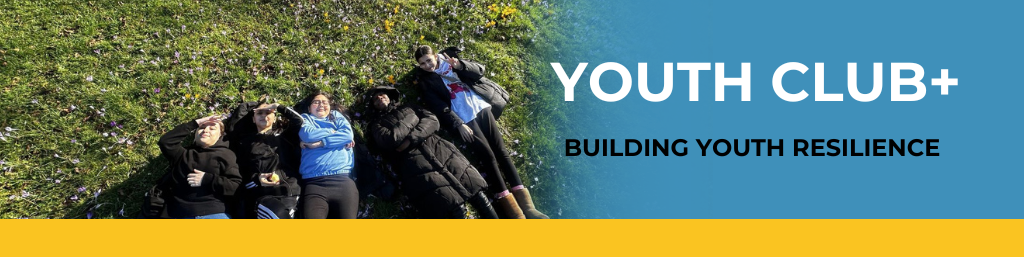
Youth Clubs+
Since 2020, I have been delivering the RJ4All Youth Clubs+ providing disadvantaged families with free access to high quality out-of-school educational, sport and artistic activities for their children. These are neither holiday clubs nor playgroups but structured interventions aiming to build resilience, friendships, skills and knowledge. They are offered to local youth with the belief that that in order to improve community cohesion, address anti-social behaviour and pursue equal opportunities for all, first we must provide tailored and genuine opportunities to our youth and communities that tap into their talents and interests. The Clubs form part of my RJiNEAR resilience model and combine cognitive learning through workshops, sports and art activities. They have been the subject of multi-year evaluations. The project is run under the auspices of the RJ4All International Institute
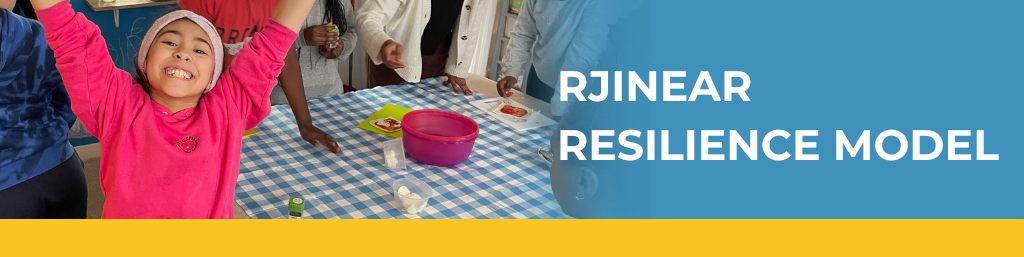
RJiNEAR Resilience Model
I designed a resilience model, RJiNEAR, and have been piloting it for over 10 years in the community, youth and criminal justice settings, online and universities. RJiNEAR stands for RJ = restorative justice + i (myself) N New knowledge about myself E Emotional agility A Awareness of options & choice R Responding with growth ‘in spite of …’ The model works towards a positive, growth-oriented change in life where a person at risk works on the development of the values, skills and resources towards life based on human goods. The model also draws on community power and community involvement in proving a holistic approach to preventing extremist ideologies and indeed violent actions motivated by hate and extremism.